Independent Guide to Choosing Transportation for Exploring Canadian Highways
Introduction
Planning a trip through Canada requires balancing vast geographical distances, distinct regional climates, and changing road conditions. From the rugged coastal shores of British Columbia and the high mountain passes of Alberta to the historic towns and lake corridors of Southern Ontario, your choice of transportation shapes your entire journey.
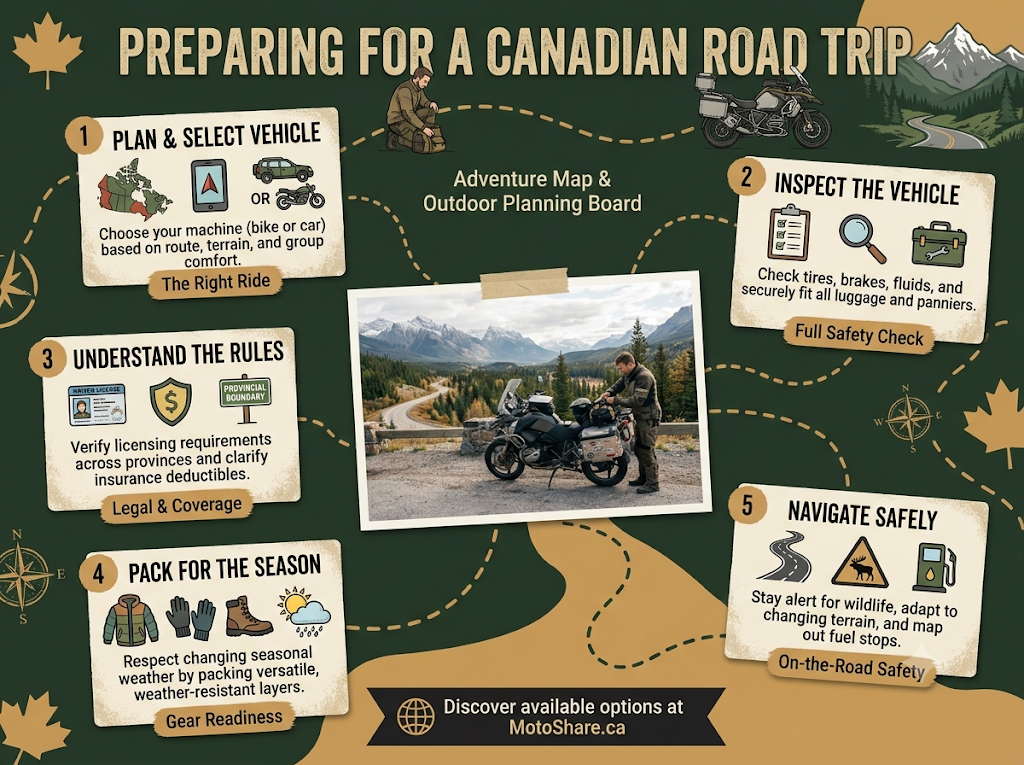
A successful journey begins with realistic preparation. Selecting the right vehicle means looking past the daily rate to assess practical travel demands: passenger count, luggage space, seasonal weather shifts, driver licensing classes, and specific host policies. Taking the time to evaluate these factors beforehand ensures that your chosen ride matches your itinerary, whether you are running errands in a city centre or setting out on an extended cross-country adventure.
Choosing Between a Motorcycle and a Car
Deciding between two wheels and four depends on your travel party, luggage volume, physical stamina, and the kind of travel experience you want to create. Each vehicle type meets very different travel needs.
Reserving a motorcycle rental Canada option offers an immersive connection to the landscape. On two wheels, you feel ambient temperature drops in shaded valleys, smell pine forests along lake corridors, and experience the physical curves of secondary highways. For solo travelers or paired riders traveling light, a motorcycle makes the ride itself the centrepiece of the trip. However, motorcycles require full physical concentration, offer limited storage in saddlebags or a tail bag, and leave you directly exposed to sudden rain, wind, and heat.
In contrast, choosing a car rental Canada reservation provides an enclosed cabin, generous passenger seating, and protected cargo space. An automobile accommodates families, small groups, camping gear, and multiple large suitcases. A passenger vehicle shields occupants from unexpected prairie squalls, chilly mountain mornings, and heavy summer rainfall, while offering easy climate control. When you must cover long highway distances on a strict schedule regardless of changing weather, a car remains the low-stress, practical choice.
Exploring Canadian Cities
Urban traffic patterns, parking availability, and proximity to regional touring routes differ across major Canadian metropolitan hubs. Reviewing pickup points relative to local highway access helps you avoid unnecessary delays.
Southern Ontario and Toronto
In Ontario, arranging a motorcycle rental Toronto vehicle means planning around heavy expressway traffic on routes like Highway 401, the Don Valley Parkway, and the Gardiner Expressway. Setting out early in the morning lets you bypass commuter congestion and provides cleaner access to scenic secondary routes, including the Niagara Escarpment, the Kawartha Lakes, or the curves through the Muskokas.
Conversely, visitors traveling for downtown conferences, family vacations, or airport pickups often find that a car rental Toronto booking makes it easier to navigate underground parking garages, haul multiple suitcases to and from Toronto Pearson International Airport, and stay comfortable during humid summer downpours.
The Pacific Coast and Vancouver
On the West Coast, organizing a motorcycle rental Vancouver booking places you near famous coastal highways like the Sea to Sky Highway toward Whistler, as well as ferry routes heading to Vancouver Island. Because coastal weather systems can produce sudden rain and thick fog, selecting a machine with quality tire tread, anti-lock brakes, and waterproof storage is essential for safe riding.
The Foothills and Calgary
In Alberta, picking up a motorcycle rental Calgary vehicle serves as a natural departure point for exploring the badlands around Drumheller or the steep ascents of the Canadian Rockies. High-elevation corridors, such as Highway 40 through Kananaskis Country, include some of Canada’s highest paved roads. Morning temperatures in mountain passes can dip close to freezing even during midsummer, making wind protection, layered apparel, and heated grips valuable assets.
Planning a Motorcycle Road Trip
Embarking on a motorcycle road trip Canada journey requires realistic daily goals and careful preparation. Because towns and service centres can be spaced far apart outside primary population corridors, planning ahead keeps your journey safe and manageable.
Key practical steps include:
- Pacing and Distances: Plan for daily distances between 250 and 400 kilometres. Navigating winding provincial roads and mountain passes requires intense concentration and results in lower average travel speeds than straight freeway driving.
- Weather and Road Conditions: Check provincial 511 highway advisories and weather radar each morning. Be prepared for highway construction, loose gravel, and sudden crosswinds.
- Protective Equipment: Wear an approved safety helmet meeting DOT, ECE, or Snell standards, an abrasion-resistant jacket with impact armour, sturdy over-the-ankle boots, and full-coverage gloves. Keep rain gear easily accessible.
- Fuel Range: Gaps between open gas stations in rural and northern areas can exceed 150 kilometres. Monitor your fuel level and avoid passing open service stations when your tank drops below one-third.
- Luggage Distribution: Secure panniers with rated straps, keeping heavier cargo low and centered to maintain stable handling.
For routes that include unpaved logging roads, hard-packed gravel, or remote secondary connectors, an adventure motorcycle rental Canada booking provides the spoked wheels, upright ergonomics, and long-travel suspension needed to handle rough surfaces with confidence while maintaining highway comfort.
Finding and Evaluating Rental Options
When looking for transportation on short notice, travelers frequently search for a motorcycle rental near me to locate host listings or local fleet depots close to their accommodations, airport terminal, or transit station.
Before confirming a reservation to rent a motorcycle in Canada, examine the full listing details:
- Licence Qualifications: Ensure you hold a full, unrestricted motorcycle licence class. Graduated learner permits with nighttime or highway restrictions are typically excluded by commercial rental insurance. International visitors should confirm whether their domestic licence is accepted or if an International Driving Permit is required.
- Age Thresholds: Rental providers commonly enforce a minimum age of 21, and often 25 for large-displacement, premium, or high-performance models.
- Deposit Holds: Most providers require a pre-authorized security deposit on a major credit card to cover potential damage, fuel shortages, or unpaid road tolls.
- Insurance Details: Clarify third-party liability coverage, collision deductibles, and policy exclusions directly with the provider. Standard personal credit card insurance policies almost universally exclude two-wheeled motorized vehicles.
- Distance Allowances: Check whether the reservation includes unlimited travel or enforces a daily kilometre limit with excess mileage fees.
Motorcycle Versus Car Comparison
| Factor | Motorcycle | Car |
| Passenger capacity | Depends on the model | Depends on the vehicle |
| Luggage | Usually more limited | Generally more flexible |
| Weather protection | Limited | Enclosed cabin |
| Parking | May be easier in some locations | Depends on location and vehicle size |
| Suitable use | Experienced riders travelling light | Families, groups, or travellers carrying more luggage |
Practical Pre-Trip Checklist
- Confirm travel dates and pickup location.
- Check licence and age requirements.
- Review rental terms, deposits, and cancellation conditions.
- Verify insurance details and exclusions with the provider.
- Inspect the vehicle and document existing damage.
- Check current weather and road conditions.
- Plan luggage, protective equipment, fuel stops, and rest breaks.
How MotoShare.ca Supports Rental Discovery
Finding suitable transportation across Canada is straightforward when using a centralized marketplace. MotoShare.ca provides a platform where travelers can search vehicle listings by selecting their target pickup location and rental dates.
The marketplace lets users explore a wide selection of motorcycle categories—including accessible commuter models, long-distance touring machines, sport models, premium cruisers, and adventure-ready bikes—alongside passenger automobile options. Because individual hosts and fleets establish their own booking terms, travelers can compare vehicle specifications, pickup arrangements, and mileage allowances in one place to find an option that matches their journey.
Frequently Asked Questions
How do I choose between an adventure motorcycle and a touring motorcycle?
Choose a touring motorcycle if your route consists entirely of paved highways and you want maximum wind protection, deep seat padding, and large integrated luggage. Choose an adventure motorcycle if your journey includes gravel roads, variable pavement, or remote backroads where upright posture and extra suspension travel improve control.
Can international visitors rent vehicles using their home country’s driver’s licence?
Yes, most Canadian providers accept valid, unrestricted foreign licences for temporary visitors. If your licence is in a language other than English or French, carry an International Driving Permit alongside your primary licence to help providers and authorities verify your credentials.
What insurance coverage should I confirm before renting a motorcycle?
Confirm third-party liability coverage, collision damage deductibles, and roadside assistance terms. Personal credit card collision damage waivers rarely cover motorcycles, meaning protection must be arranged directly through the rental provider or marketplace host.
What is a realistic daily travel distance for a road trip across Canada?
For motorcycle touring, aim for 250 to 400 kilometres per day to allow time for weather adjustments, fuel stops, and rest breaks without causing physical fatigue. For automobile travel, daily goals of 500 to 650 kilometres are reasonable when drivers share highway duties.
Conclusion
Selecting the right rental vehicle involves assessing your travel route, personal experience, passenger needs, and seasonal weather patterns. Taking time to verify provincial licence rules, inspect vehicle condition, confirm insurance deductibles, and plan daily distances ensures a safe and comfortable trip. Marketplaces like MotoShare.ca serve as a practical starting point for researching car and motorcycle options across Canadian cities, helping you identify transportation tailored to your itinerary.
Leave a Reply