Smart Transportation Planning: How to Select the Ideal Rental Vehicle for Any Trip
Introduction
Transportation shapes the entire flow of a journey. Whether you are navigating your regular workweek routine, arriving in an unfamiliar city for a holiday, or packing for a multi-day regional road trip, the way you move from place to place directly influences your daily comfort and schedule. Relying on fixed public transit timetables or fluctuating taxi availability can sometimes limit what you can accomplish, whereas having an independent set of wheels offers flexibility and direct control over your time.
However, selecting a suitable rental is about far more than grabbing the first option that appears on your screen. A machine that looks convenient or economical at a glance might turn out to be completely impractical if it cannot fit your luggage, struggles on steep rural inclines, or proves difficult to park in crowded commercial streets. Taking the time to evaluate vehicle categories, verify physical pickup points, check rental durations, and understand listed terms before making a commitment helps ensure that your transportation actively supports your itinerary.
Understand the Purpose of Your Journey
The foundation of smart vehicle selection is evaluating the practical demands of your upcoming trip. Different journeys place vastly different requirements on personal mobility, and choosing without considering your route often leads to unnecessary friction.
For instance, a daily office commute through dense downtown traffic requires agility, good fuel economy, and effortless parking. Conversely, a relaxed weekend escape to a rural retreat demands comfortable seating and enough storage space for bags and supplies. Group vacations and family outings introduce their own set of constraints, where passenger safety, air conditioning, and generous trunk volume take precedence over compact vehicle dimensions.
Recognizing that a nimble ride suited for short urban errands is rarely ideal for long-distance highway touring prevents you from making compromises that could disrupt your plans.
Compare Motorcycles, Scooters, Cars, and Bicycles
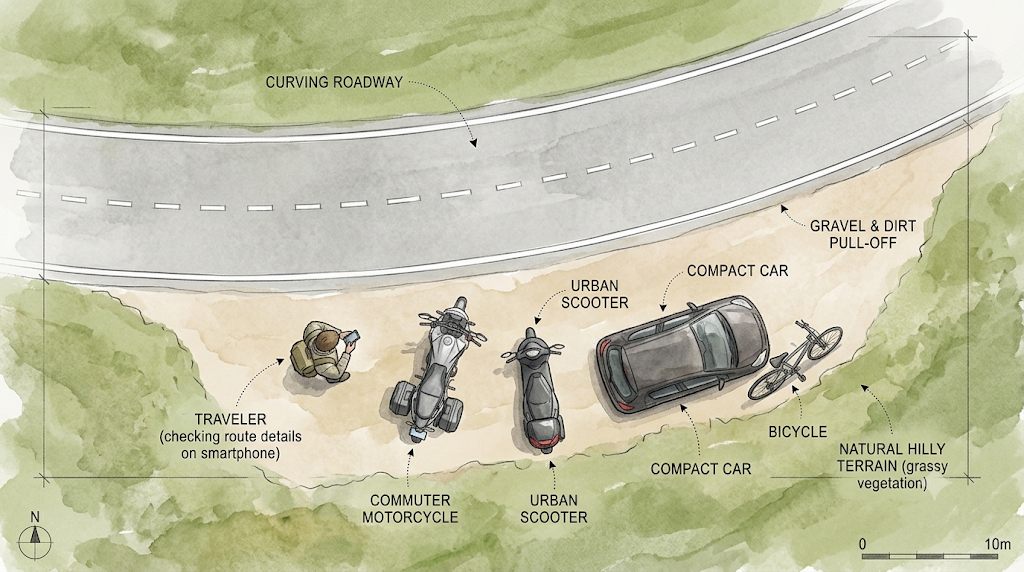
Every vehicle category brings distinct strengths and inherent limitations. The goal is not to find a single perfect vehicle type, but to find the one that best matches your specific route, party size, and comfort level.
- Bicycles: Best suited for short neighborhood trips, quiet resort towns, or dedicated greenway exploration. They are zero-emission, budget-friendly, and simple to park, though restricted by physical stamina, elevation changes, and weather.
- Scooters: With automatic transmissions, low step-through frames, and built-in storage compartments, scooters excel at navigating slow-moving city corridors. Arranging a scooter rental in India is a common, cost-effective method for commuters and travelers to handle intra-city travel, visit local markets, and manage tight parking constraints.
- Motorcycles: Larger wheels, manual transmissions, and sturdier frames make motorcycles well-suited for solo highway travel, winding scenic roads, and longer distances where stability and power matter.
- Cars: An enclosed cabin provides superior weather protection, dedicated luggage security, and the ability to carry multiple passengers comfortably. Choosing a car rental in India gives families, corporate travelers, and larger groups the convenience of traveling together seamlessly on regional highways.
Matching passenger count, baggage volume, weather patterns, and personal operating experience to these options ensures a much more comfortable journey.
Research Rental Options by Location
Geographic proximity is just as important as the daily rental rate. A low price loses its value if collecting the vehicle involves a costly, time-consuming trip to an inconvenient edge-of-town depot.
When researching an accessible bike rental near me, take time to confirm the operator’s actual street address relative to your hotel, transit terminal, or office. Inventory fluctuates across different neighborhoods, and an operator situated along an industrial bypass may offer limited assistance if your activities center around a historic downtown core.
Local conditions also heavily dictate which vehicle category makes sense. For instance, travelers exploring a bike rental in Goa typically focus on coastal cruising, beach access, and navigating narrow village lanes where two-wheelers park easily. On the other hand, someone evaluating a bike rental in Bangalore often contends with heavy metropolitan traffic, extended distances between commercial centers, and variable weather, making an agile scooter or a commuter motorcycle a practical way to bypass rush-hour bottlenecks.
Understand Rental Duration and Terms
Rental agreements and pricing policies vary considerably between independent operators. Before committing your funds, carefully review the complete duration details, pickup and return time windows, and fee structures.
Many providers offer tiered rates based on rental duration, with daily, weekly, or monthly intervals featuring different terms. Pay close attention to security deposit requirements, accepted payment methods, and daily distance caps. Selecting an independent self-drive bike rental provides the autonomy to adjust your stops on the fly, but you must know whether excess kilometer fees apply if you take an unexpected detour.
Similarly, reserving a self-drive car rental in India gives families complete privacy and flexible travel timing, provided they understand fuel policies—such as full-to-full or same-to-same requirements—and grace periods for late returns. Verifying these conditions upfront protects you from unexpected expenses at drop-off.
Plan Before Booking
Following a systematic checklist before finalizing your reservation helps avoid misunderstandings at the pickup counter:
- Confirm your exact travel dates, collection time, and drop-off schedule.
- Compare relevant vehicle categories based on luggage, passenger count, and route terrain.
- Review listing specifications to ensure transmission types and engine displacements meet your expectations.
- Verify the exact depot address and confirm whether return logistics require returning to the original location.
- Read the provider’s operating rules, cancellation terms, and deposit refund timelines.
- Ensure your driving license, endorsements, and national identity cards are valid and accepted.
- Clarify accepted payment channels for both the rental fee and the refundable deposit.
- When taking delivery, inspect the vehicle in person and document all pre-existing cosmetic flaws.
When you decide to rent a bike online, reviewing the itemized cost breakdown ensures you know exactly what is included in the base rate and what incurs additional charges.
Consider Safety and Responsible Travel
Operating a rental vehicle requires personal responsibility and adherence to local safety standards. Always ensure that the machine is roadworthy before setting off: inspect tire tread depth, test brake responsiveness, verify that headlights, tail lamps, and indicators function properly, and check horn operation.
If you are riding a two-wheeler, always wear an approved, properly fitted safety helmet, and make sure one is provided for your pillion passenger. Follow local speed limits, yield to pedestrians, observe posted traffic signs, and avoid driving when fatigued. Familiarize yourself with emergency contact numbers and the operator’s breakdown support procedures so you know what steps to take should an issue occur.
Planning Travel Across India and Other Asian Destinations
Venturing into unfamiliar domestic states or traveling internationally introduces additional administrative and legal considerations. Driving conventions, permit recognition, and road regulations differ across borders.
Domestic travelers exploring a bike rental in India should verify interstate tax permit requirements if they plan to ride across state lines, as commercial permits must be valid for multi-state passage. For international travelers looking into a motorcycle rental Asia, securing an International Driving Permit (IDP) alongside a domestic license is generally essential. Additionally, standard rental agreements almost never allow vehicles to be driven across international borders without dedicated customs clearances and express owner consent.
How MotoShare.asia Fits Into Vehicle-Rental Research
Locating dependable rental options in unfamiliar destinations can be difficult when dealing with fragmented local providers. MotoShare.asia functions as an online vehicle-rental marketplace designed to connect travelers, commuters, students, and professionals with local rental providers across India and selected destinations in Asia.
The platform allows users to explore motorcycles, scooters, cars, and bicycles by entering their destination, rental dates, and preferred vehicle category. By bringing listings from independent local providers into a single interface, MotoShare.asia helps users review vehicle specifications, compare pricing and rental terms, and assess available transport options before committing to a trip.
FAQs
What documents do I generally need to show when collecting a rental vehicle?
Most rental providers require an original, valid driving license matching the specific vehicle class, alongside a government-issued photo identity card or passport. When renting in an international destination, travelers typically need an International Driving Permit alongside their domestic license.
Why is it important to take photos or video of the vehicle during pickup?
Taking clear, timestamped photos or video of the vehicle during handover creates an objective record of existing scratches, scrapes, or dents. This protects you from being held financially responsible for pre-existing cosmetic damage when you return the vehicle.
How do security deposits usually work for rental vehicles?
Security deposits act as a financial safeguard for operators against unpaid traffic violations, fuel shortages, late returns, or minor damage. Deposits are collected via card pre-authorization, bank transfer, or cash, and are refunded after the vehicle is returned and inspected according to the provider’s terms.
Can rental vehicles be driven across state or national borders?
Domestic travel across state borders is generally permitted provided the vehicle carries valid commercial permits and any applicable border taxes are paid. However, crossing international borders in a standard rental vehicle is almost never permitted without specialized customs documentation and express written authorization from the fleet owner.
Conclusion
Making sound vehicle rental decisions comes down to matching your transport to your specific route, passenger requirements, baggage volume, and budget. Taking the time to evaluate vehicle categories, verify license rules, review rental terms, and inspect vehicles prior to departure prevents travel disruptions and unexpected fees. Platforms like MotoShare.asia help streamline this process by enabling travelers to discover and compare rental motorcycles, scooters, cars, and bicycles across India and selected Asian destinations. With thoughtful planning, clear documentation, and a thorough pickup check, you can set out on the road with complete peace of mind.
Leave a Reply